

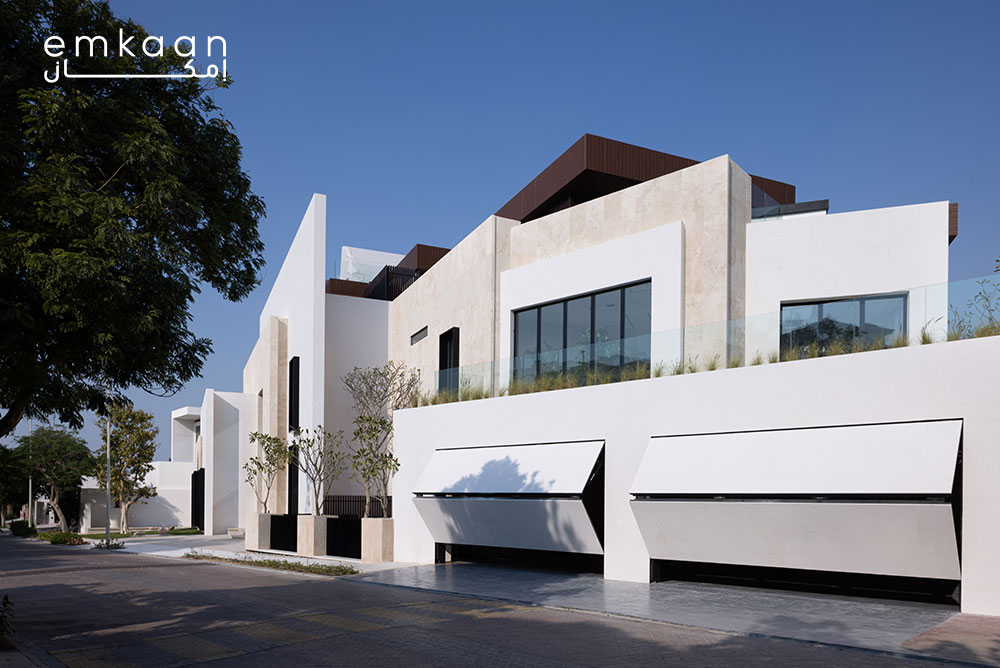
Rethinking Transparency, Adaptation & How We Design in the Gulf
Our Relationship With Transparency Is Changing
As humans, we naturally long for daylight.
- For views of greenery.
- For connection to the outside.
Yet today, transparent building envelopes are increasingly questioned.
As the world outside feels more uncertain — socially, environmentally, climatically — many prefer withdrawal. Instead of openness, we design retreats. Instead of connection, we create sealed environments.
Energy concepts reinforce this instinct:
- Protect interiors from solar gain.
- Prevent heat loss.
- Limit opening ratios.
- Rely on smart systems and algorithms.
In many contemporary buildings, the climate envelope becomes a barrier.
Light, air, and sun are treated as risks to be controlled.
In such scenarios, people are often treated as disruptive elements — better kept passive inside sealed shells.
But is that the only way?
Another Way Is Possible
Architects like Anne Lacaton and Jean-Philippe Vassal demonstrate a different approach.
Instead of sealing buildings, they introduce winter gardens — intermediary spaces that sit between outside and inside.
These are not decorative additions.
They are adaptable layers:
- Transparent and translucent sliding panels
- Operable elements
- Curtains for shade or privacy
- Flexible spatial boundaries
The result is not a bunker.
It is an adaptable environment that responds to changing conditions.
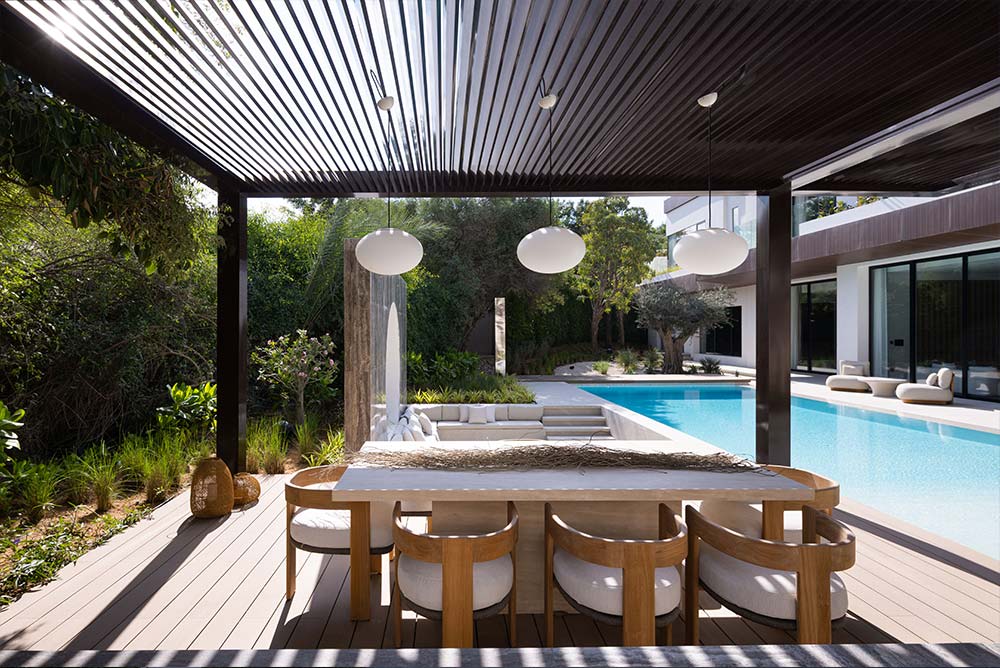
The Deeper Idea: Layering Instead of Sealing
The winter garden concept teaches us something fundamental:
Transparency does not have to mean exposure.
Protection does not have to mean isolation.
A façade is not simply “glass.” It can be:
- Operable or fixed
- Shaded or exposed
- Buffered by an intermediary space
- Directly enclosing a conditioned room
Each configuration performs differently.
When transparency borders a buffer space, its thermal behavior changes entirely.
And this is where thinking must become more nuanced.
Adaptation: The Missing Dimension
What makes winter gardens powerful is not only their physical configuration — it is the human interaction they allow.
Studies comparing triple glazing to winter gardens showed something important:
Even high-performance glazing could not match the adaptability of layered space.
Why?
Because a winter garden allows occupants to:
- Open panels
- Close curtains
- Adjust shading
- Move between zones
- Change clothing
When people can alter the spaces they inhabit, they become more tolerant of environmental variation.
The acceptable temperature range increases.
The reliance on heating and cooling decreases.
Comfort becomes participatory — not mechanical.

What This Means for Us in the Gulf
In our climate, we face the opposite challenge of cold regions.
But the principle still applies.
Instead of:
Outside 45°C → Inside 21°C
(Sealed envelope + heavy mechanical reliance)
We can explore:
Outside → Shaded space → Transitional buffer → Interior.
Layered climate mediation.
Not removing air conditioning — but reducing overdependence.
Not rejecting transparency — but redefining it.
- Operable façades instead of fixed glass
- Shaded intermediary zones instead of exposed glazing
- Exposed thermal mass where appropriate
- Adjustable systems that invite interaction
True environmental intelligence lies in creating options.
Beyond Architecture: A Cultural Responsibility
Modern buildings often encourage passive occupants.
- Everything is automated.
- Everything is controlled.
- Everything is fixed.
But sustainability requires engagement.
If people are allowed to adapt — by opening, closing, adjusting, moving — they become more resilient to climate variation.
Architecture can either increase dependence on machines or cultivate environmental awareness.
This is not only technical.
It is cultural.

The Takeaway for Us
This reflection began with winter gardens — but its lesson extends much further.
We must:
- Question default transparency.
- Question sealed envelopes.
- Question automation as the only solution.
- Study orientation, shading, behavior, and material performance in depth.
- Design layered environments instead of rigid shells.
The deeper we understand context, the more flexible our solutions become.
The more flexible our solutions, the more responsible our architecture becomes.
In the Gulf — where cooling demand defines our environmental footprint — this mindset is not optional.
It is necessary.
Let us design spaces that adapt.
Let us create architecture that mediates rather than isolates.
Let us think beyond what is familiar — and toward what is intelligent.

